
Chasing the Aurora:
A Journey Through Iceland's Elements of Fire and Ice
Iceland is a country defined by extremes. Glaciers sit atop active volcanoes, geothermal springs steam beside frozen waterfalls, and for several months each year, the night sky puts on one of nature's most spectacular displays. For many travelers, booking a northern lights tour to Iceland is the main reason to visit, drawn by the chance to witness the aurora borealis dancing in ribbons of green, purple, and pink above dramatic Arctic scenery.
But a trip built around the northern lights quickly becomes something more: a journey through lava fields and ice caves, black sand beaches and volcanic craters. Iceland offers far more than a nighttime spectacle. Its daytime scenery tells the story of a planet still actively shaping itself.
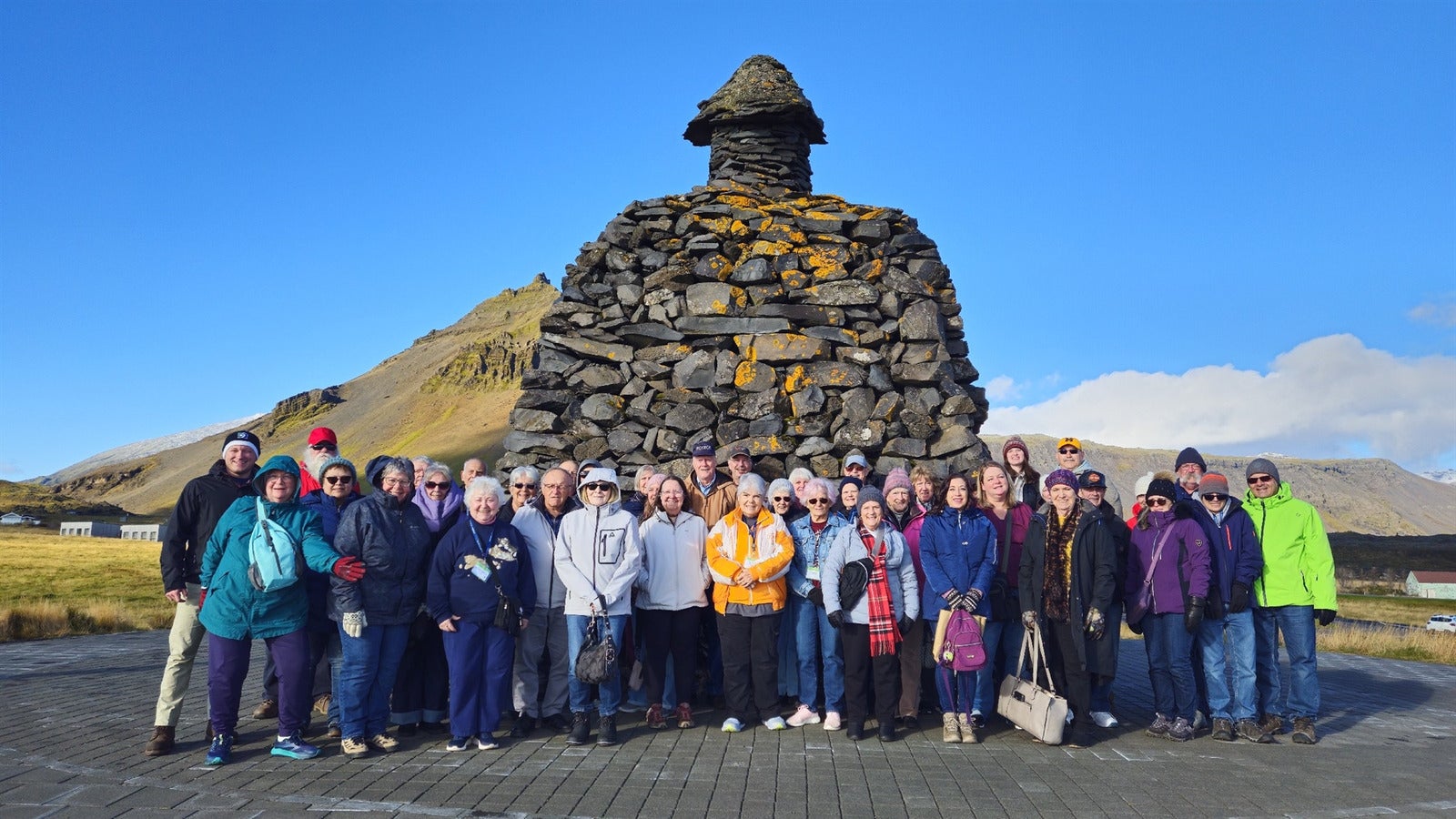
Guests in Iceland
The Science and Spectacle of the Aurora Borealis
The Northern Lights appear when charged particles from the sun collide with gases in Earth's atmosphere. That collision releases energy in the form of light. Green is the most common color, produced by oxygen. Purple and blue hues come from nitrogen, and they appear a bit less often. Iceland's northern latitude puts it in prime position for viewing, especially between late September and mid-April when the nights are long and dark.
Clear skies and low light pollution matter most for a good showing. Even then, the aurora is unpredictable. It might ripple across the sky in minutes, or it might take hours to appear. That unpredictability is part of what makes it so exciting to chase.
A few things help improve the odds of a great viewing night:
- Traveling during the winter months, when darkness lasts longer
- Getting away from city lights and out into open countryside
- Checking aurora activity forecasts before heading out each evening
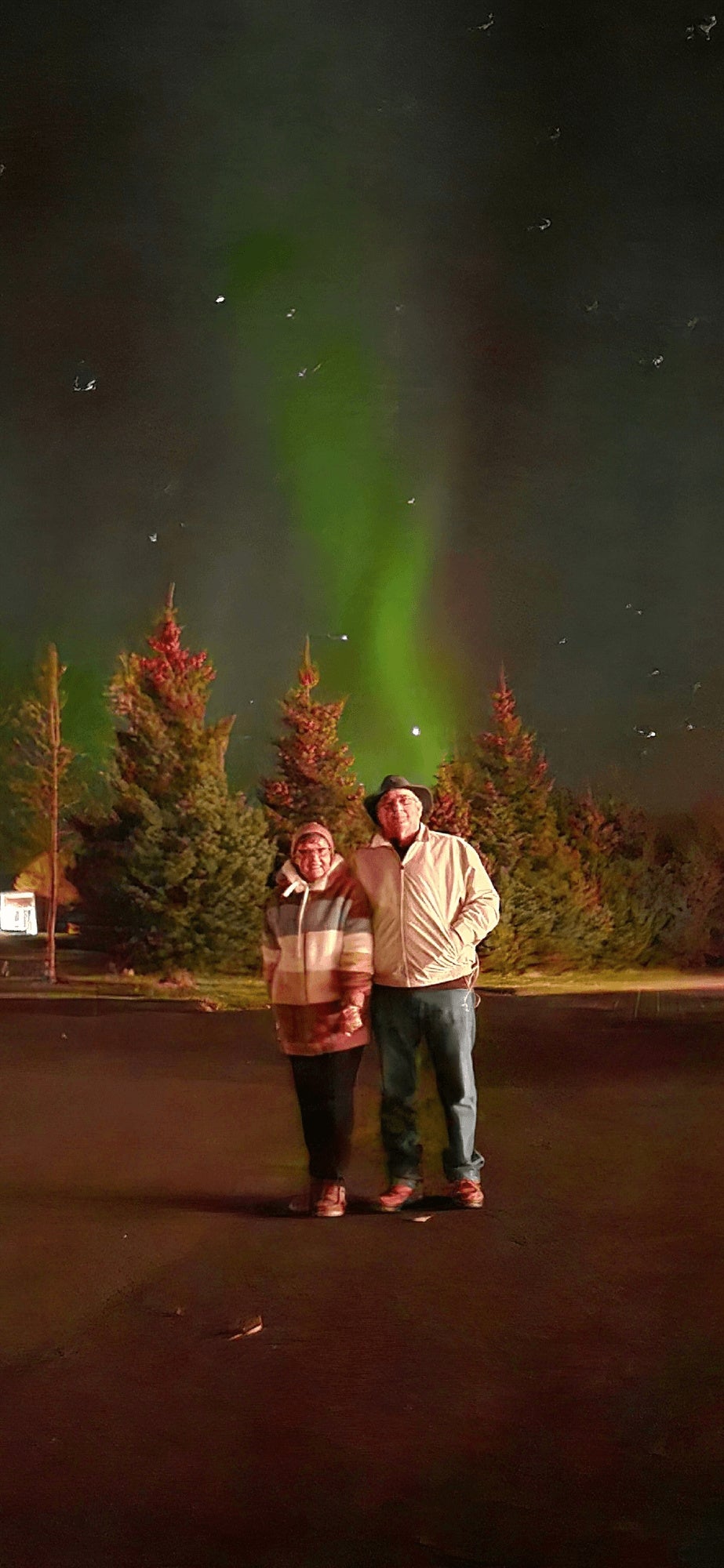
Guests with Northern Lights, Iceland
The Golden Circle: Tectonic Rifts and Erupting Earth
Iceland straddles the boundary between the North American and Eurasian tectonic plates. Nowhere is that more visible than along the Golden Circle, a stretch of countryside where the earth's crust is quite literally pulling apart. Walking through this rift valley means standing between two continents that drift a few centimeters further apart each year.
The same geologic energy powers Iceland's famous geothermal fields, where boiling water erupts skyward in dramatic bursts. Nearby, a powerful waterfall thunders down a two-tiered cliff, carved by glacial meltwater over thousands of years. Together, these sights offer a hands-on lesson in plate tectonics, geothermal power, and the slow, patient work of erosion.
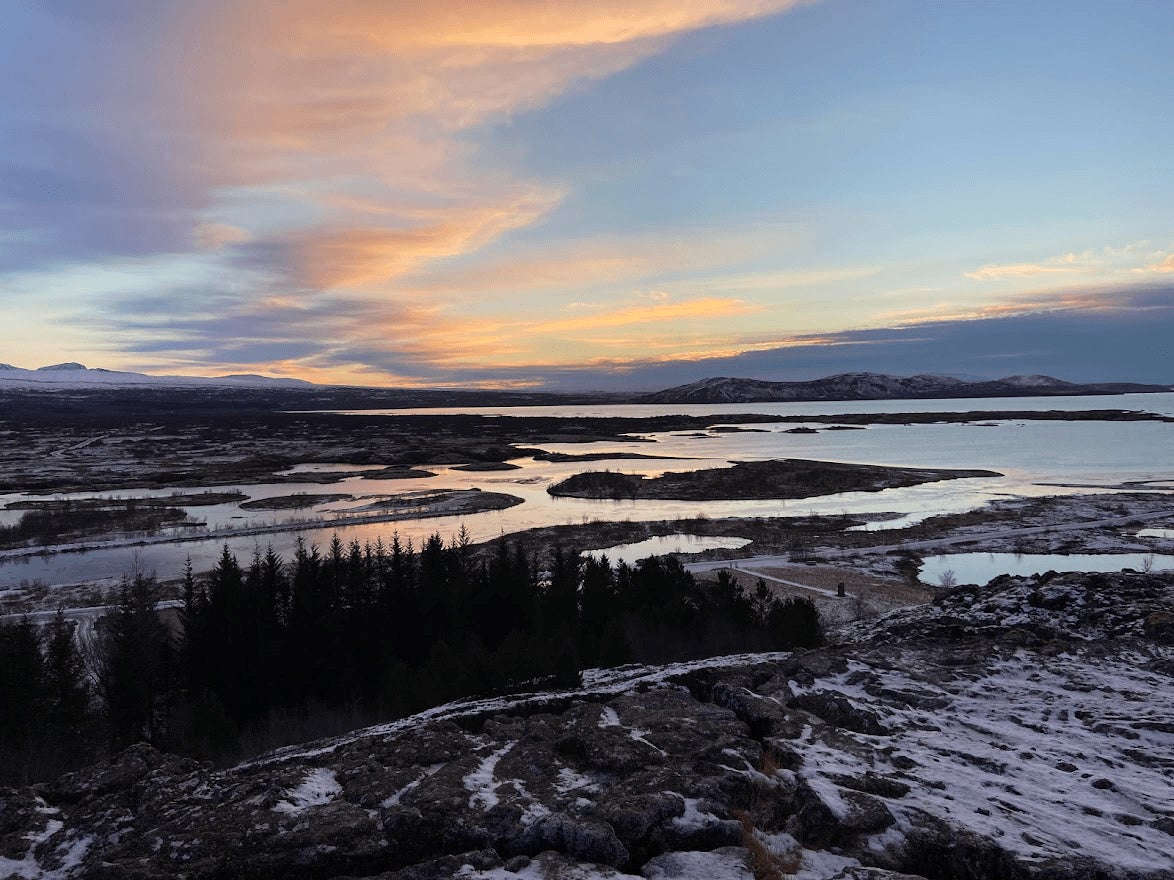
Guest photo of Thingvellir National Park, part of the Golden Circle
West Iceland and Snaefellsnes Peninsula: Waterfalls and Basalt Coasts
West Iceland offers a quieter, wilder side of the country. Waterfalls appear around nearly every bend, some cascading through moss-covered lava fields and others dropping straight into the sea. Basalt rock formations line the coastline, their hexagonal columns formed as lava cooled and cracked millions of years ago.
The Snaefellsnes Peninsula is often called a miniature version of Iceland. It has glaciers, volcanic craters, black sand beaches, and fishing villages all within a compact stretch of coastline. The combination of dramatic geology and quiet coastal charm makes it a memorable stop for travelers before nightfall brings out the aurora.
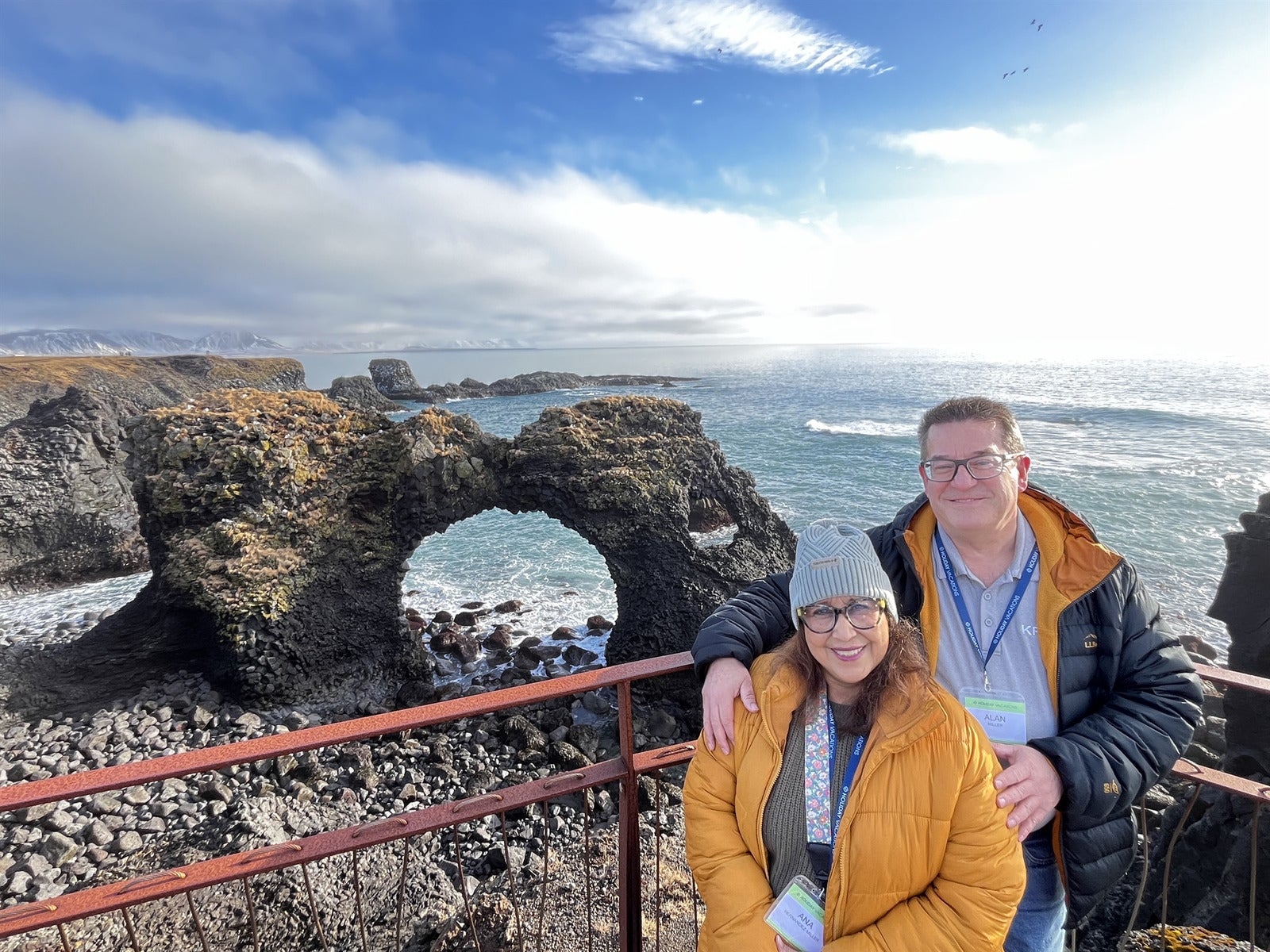
Guests at Snaefellsnes Peninsula
The Reykjanes Peninsula
The Reykjanes Peninsula sits atop some of the most active volcanic terrain in Iceland. Steam rises from cracks in the earth, and mineral-rich geothermal water pools in natural formations. This is geothermal energy at its most visible, powering much of the country while also creating landscapes that feel almost otherworldly.
Rugged lava fields stretch across the peninsula, some still bearing the scars of eruptions from just a few years ago. It is a striking reminder that Iceland's geology is not ancient history. It is an ongoing, living process, unfolding right beneath travelers' feet.
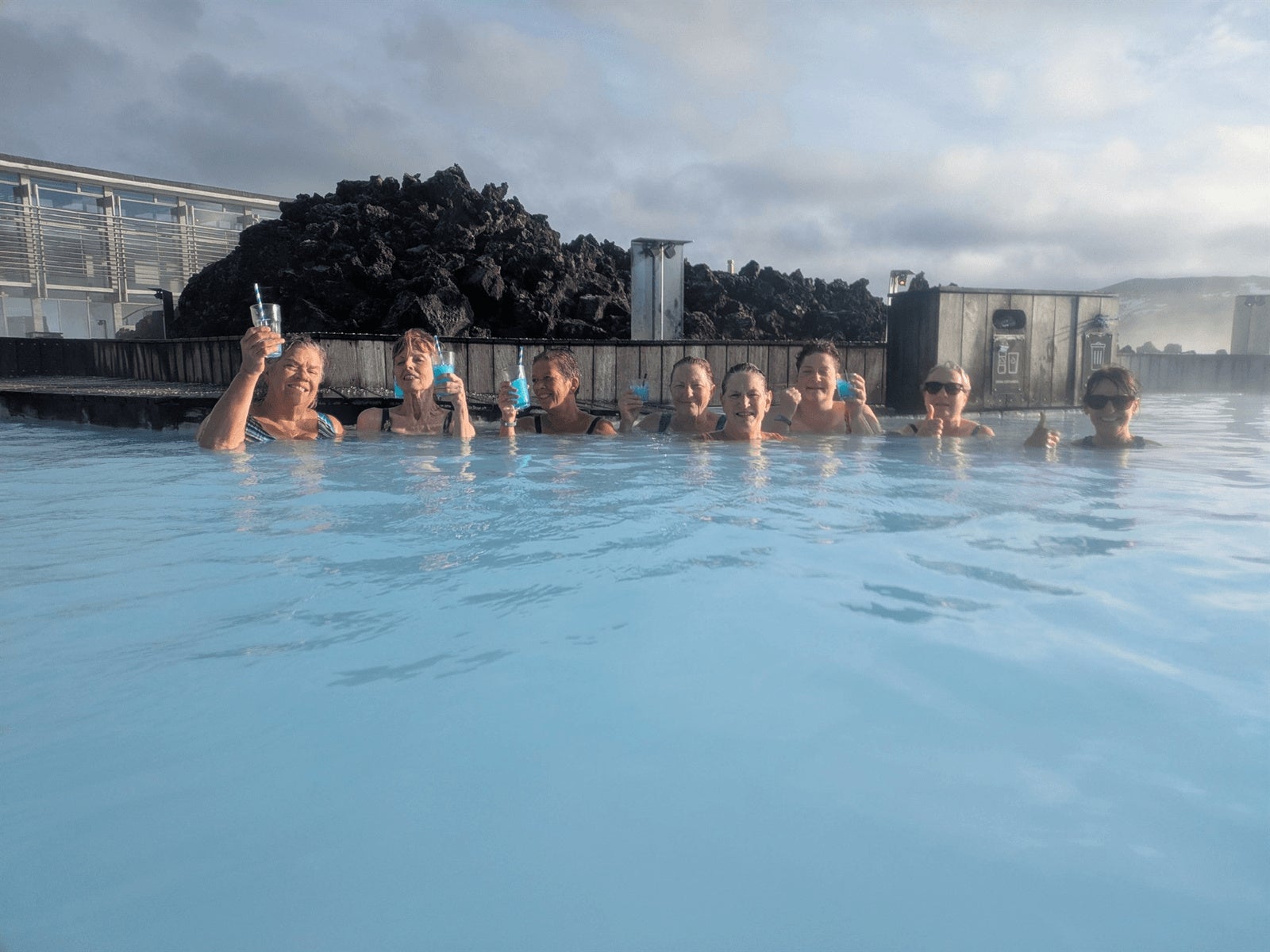
Guests at the Blue Lagoon, Reykjanes Peninsula, Iceland
How to Plan a Northern Lights Tour to Iceland
Chasing the Northern Lights takes patience, good timing, and a bit of local know-how. At Holiday Vacations, we ensure that you can soak in the beauty without having to worry about travel plans, transfers, and staying on budget. So, how do you plan a Northern Lights tour to Iceland? You let us handle it all for you. With the Holiday Advantage, your upfront price is transparent and inclusive, allowing you to immerse yourself in the journey without the burden of logistical planning or unexpected expenses. Here’s what’s included:
- Round-trip airfare from 90+ guaranteed airports across North America
- Quality accommodations with complimentary baggage handling
- Ground transportation during all scheduled activities
- Professional Tour Directors paired with knowledgeable local guides
- Numerous meals woven throughout your journey
- Around-the-clock assistance, including a 24-hour emergency phone number and an online Guest Portal
All you need to do is reserve your spot with a $200 deposit, which remains fully refundable until your final payment is due.
Start planning your getaway today by visiting holidayvacations.com to browse our departures, or book your trip online. Our Tour Sales Consultants are also available at 1-888-867-2190 to help you navigate the most suitable options and answer your travel questions.
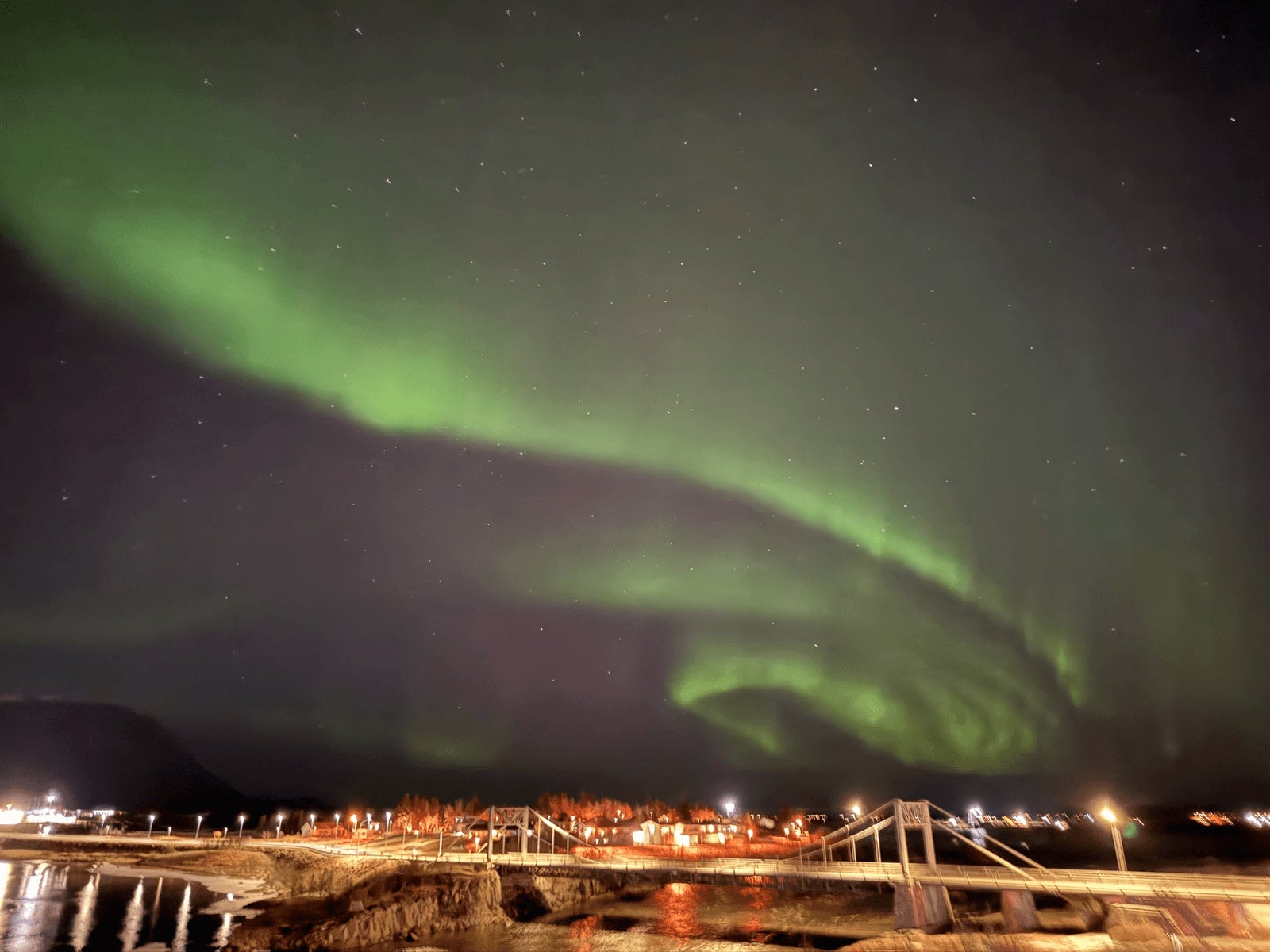
Guest photo of the Northern Lights in Iceland
Frequently Asked Questions
What should I pack for a winter trip to Iceland?
Layered clothing works best, since temperatures can shift quickly throughout the day. Waterproof boots, a warm coat, and thermal layers are all recommended for outdoor viewing at night.
Is Iceland difficult to visit for travelers who are not used to cold climates?
Iceland's winter weather can be unpredictable, but a guided tour takes the guesswork out of it. Your Tour Director handles logistics like transportation and timing, so you can focus on the experience.