
In the Footsteps of Ramses: An Epic Adventure Through Ancient Egypt
Few corners of the globe ignite the soul quite like the sun-drenched sands of the pharaohs. For millennia, the life-giving Nile has woven a tapestry of soaring monuments, celestial temples, and limestone tombs carved into the very heart of the desert. Ancient Egypt remains a breathtaking chronicle of human brilliance, unwavering faith traditions, and the height of artistic elegance. For those drawn to these enduring mysteries, curated Egypt tours provide an immersive portal into a world that time forgot. Beyond mere sightseeing, a voyage along the river’s edge creates a profound bridge between contemporary wonder and the majestic echoes of antiquity.
The Giza Necropolis: Monuments of the Old Kingdom
Standing on the edge of the desert near Cairo, the Giza Necropolis transports visitors straight into Egypt’s Old Kingdom. Built during the Fourth Dynasty, these stone giants served as grand resurrection complexes designed to ensure the pharaohs transitioned into gods in the afterlife. The Great Pyramid of Khufu dominates the horizon, constructed from over two million massive stone blocks. Nearby, the Great Sphinx guards the plateau, featuring the body of a lion and the head of a king.
Fascinating details surround these world-famous structures:
- Skilled Labor Force: Historical discoveries prove that paid, skilled workers built the pyramids rather than enslaved people. Builders lived in nearby villages, receiving quality rations and expert medical care.
- Gleaming Outer Shell: The Great Pyramid originally featured smooth, polished Tura limestone casing stones. Under the desert sun, the structures reflected light like brilliant mirrors.
- Astronomical Precision: The four corners of the Great Pyramid align almost perfectly with true north, south, east, and west, showcasing the advanced mathematical and celestial knowledge of ancient Egyptian architects.
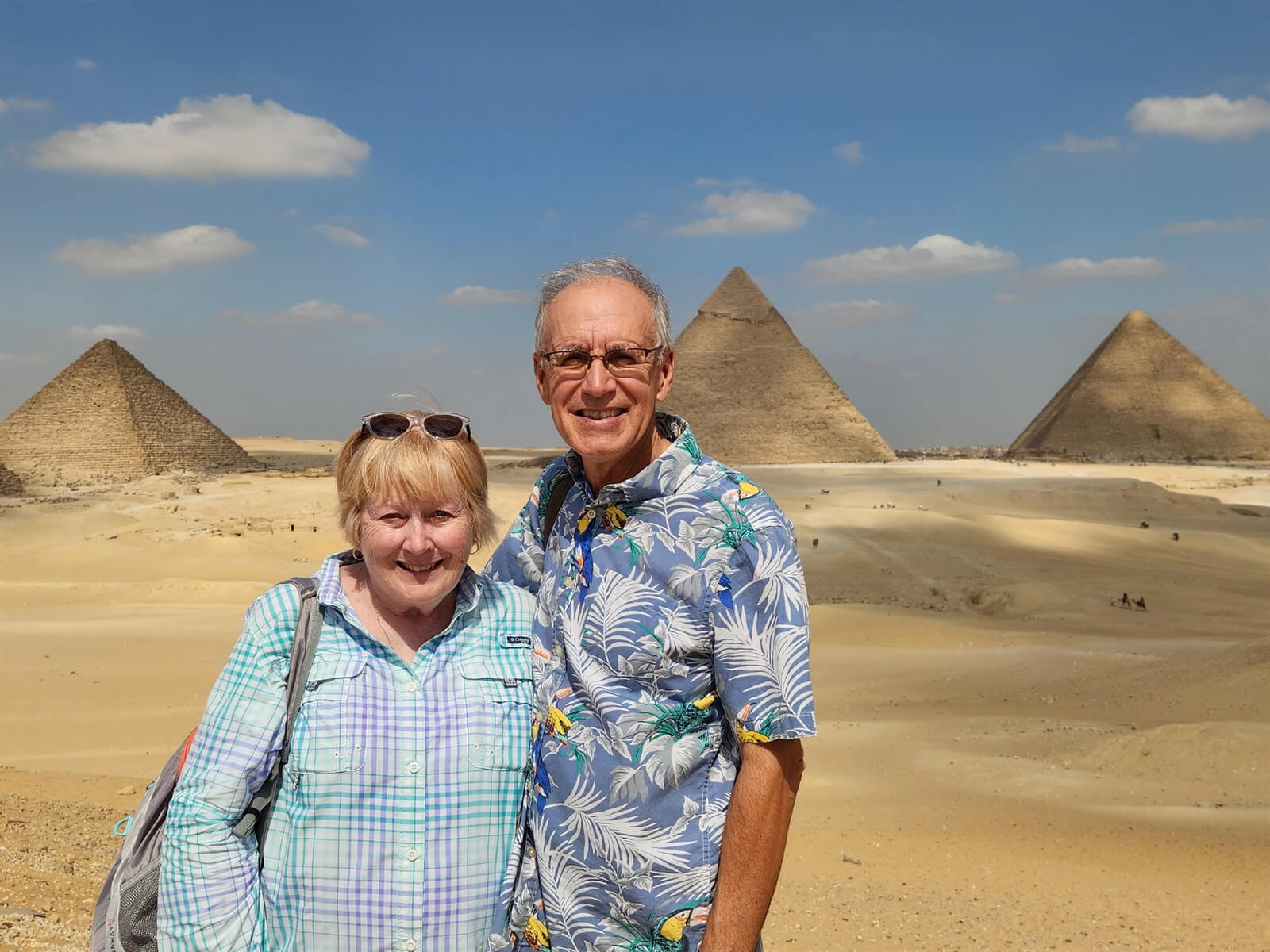
Guests with Pyramids of Giza, Giza Necropolis, Egypt
The Valley of the Kings: Royal Tombs of the New Kingdom
Further south along the Nile lies Luxor, home to the ancient city of Thebes. Here, the pharaohs of the New Kingdom abandoned visible pyramids to build hidden subterranean tombs in the Valley of the Kings. Ruler after ruler carved deep chambers into the limestone canyon, filling the walls with intricate hieroglyphics and religious texts to guide their souls through the underworld.
Curious secrets of the valley include:
- A Natural Pyramid: The pharaohs chose this location because the towering peak of al-Qurn forms a natural pyramid directly above the desert floor.
- Vibrancy Preserved by Minerals: Tomb painters did not use standard dyes. Instead, artists ground natural minerals such as lapis lazuli, malachite, and ochre into paste, creating brilliant colors that remain strikingly vivid thousands of years later.
- Clever Security Measures: Builders created false floors, dead-end corridors, and hidden shafts within the rock to foil ancient tomb robbers.
Curating these historic encounters requires expert execution, which is why choosing top-tier Egypt tours ensures travelers experience every detail with maximum comfort and deep historical context.
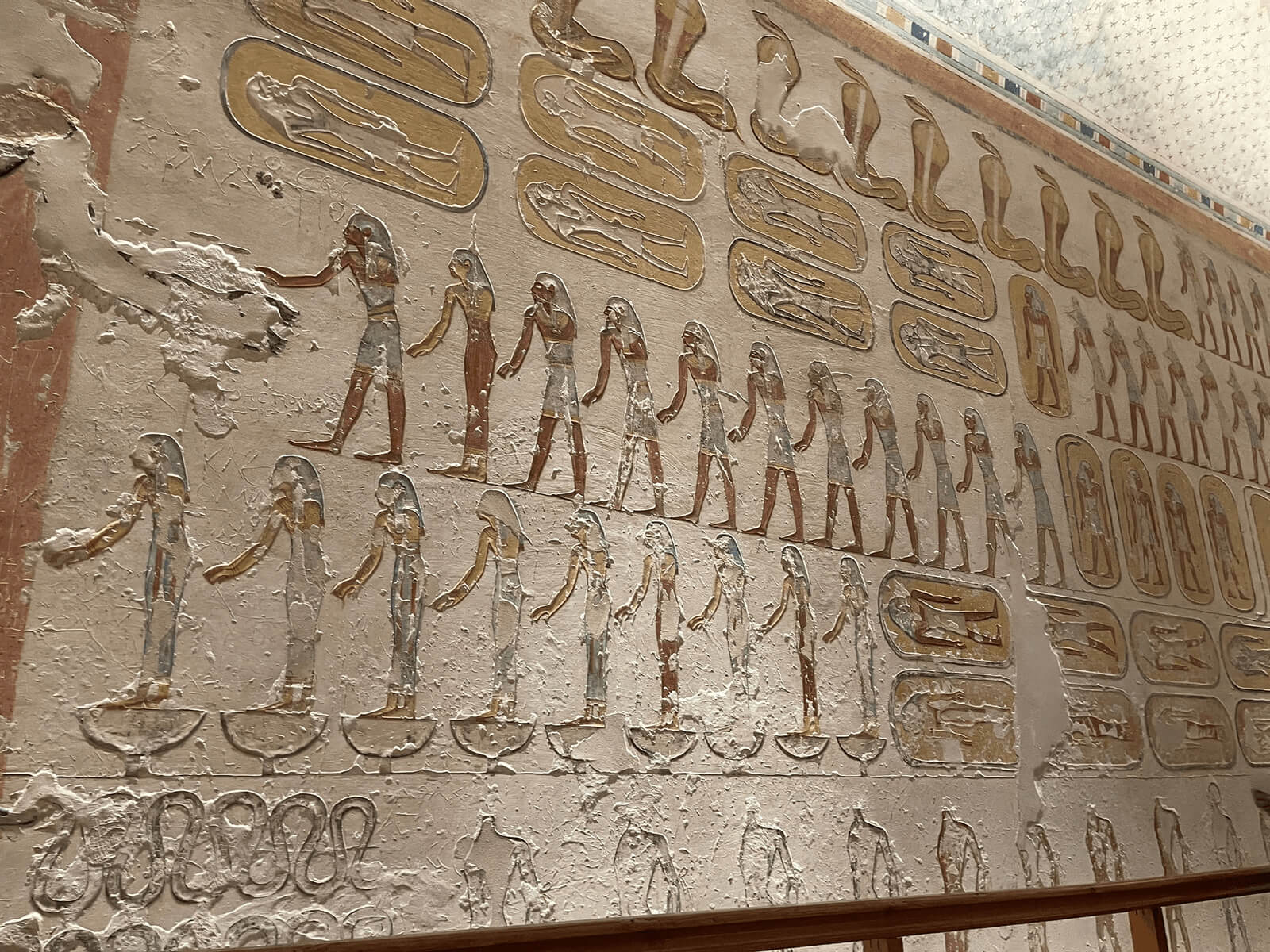
Guest photo of Hieroglyphics, Valley of the Kings
The Temple of Kom Ombo: Dual Deities and Ancient Science
Cruising down the river brings travelers to Kom Ombo, a dramatic temple rising directly along the Nile bank. Constructed during the Ptolemaic dynasty, this site features a unique architectural layout: a symmetrical double temple dedicated to two distinct gods simultaneously.
The southern wing honors Sobek, the crocodile-headed deity of fertility and creator of the world. The northern wing honors Horus the Elder, the falcon-headed god of the sky and healing.
Unique aspects of Kom Ombo highlight ancient traditions:
- Sacred Crocodiles: Ancient priests honored Sobek by keeping live crocodiles in sacred pools within the complex. Archaeologists uncovered hundreds of mummified crocodiles nearby, now preserved in an adjacent museum.
- Medical Milestones: Intricate relief carvings on the back walls of the temple depict ancient surgical instruments, including scalpels, bone saws, forceps, and suction cups, revealing surprisingly sophisticated medical practices.
- Measuring the Inundation: The complex features a deep stone well called a Nilometer. Priests measured the rising river waters each summer to predict agricultural yields and calculate seasonal taxes.
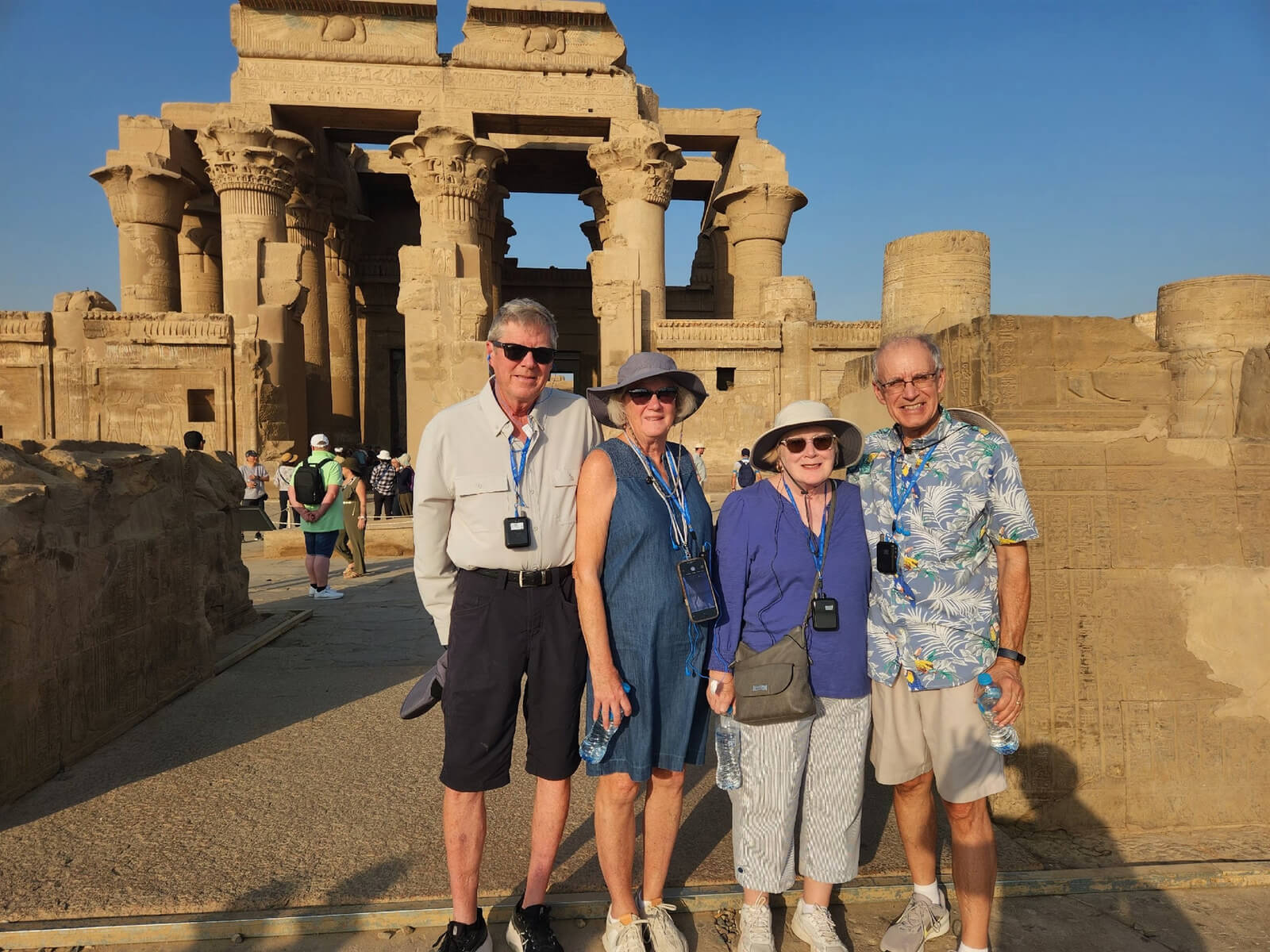
Guests at Temple of Kom Ombo
Exploring the Ancients with the Holiday Advantage
Navigating through these ancient sanctuaries on expert-led Egypt tours transforms simple historical facts into unforgettable personal discoveries. However, how you travel is just as important as where you go.
Holiday Vacations brings over 50 years of expertise to tour planning, delivering a level of service and value that sets us apart in the travel industry. Known as The Holiday Advantage, our approach ensures that every guest enjoys a truly hassle-free journey.
One of the most notable features of Holiday Vacations tours is our comprehensive and transparent package pricing. Unlike many tour operators, our tours include round-trip airfare from over 90 guaranteed departure airports nationwide. The price you see is the price you pay, covering hotel accommodations, baggage handling, professional Tour Directors, 24/7 emergency support during the trip, expert local guides, primary admissions, and many meals featuring regional flavors.
Furthermore, once your deposit is received, your price is locked in, protecting you from future airline or supplier rate increases.
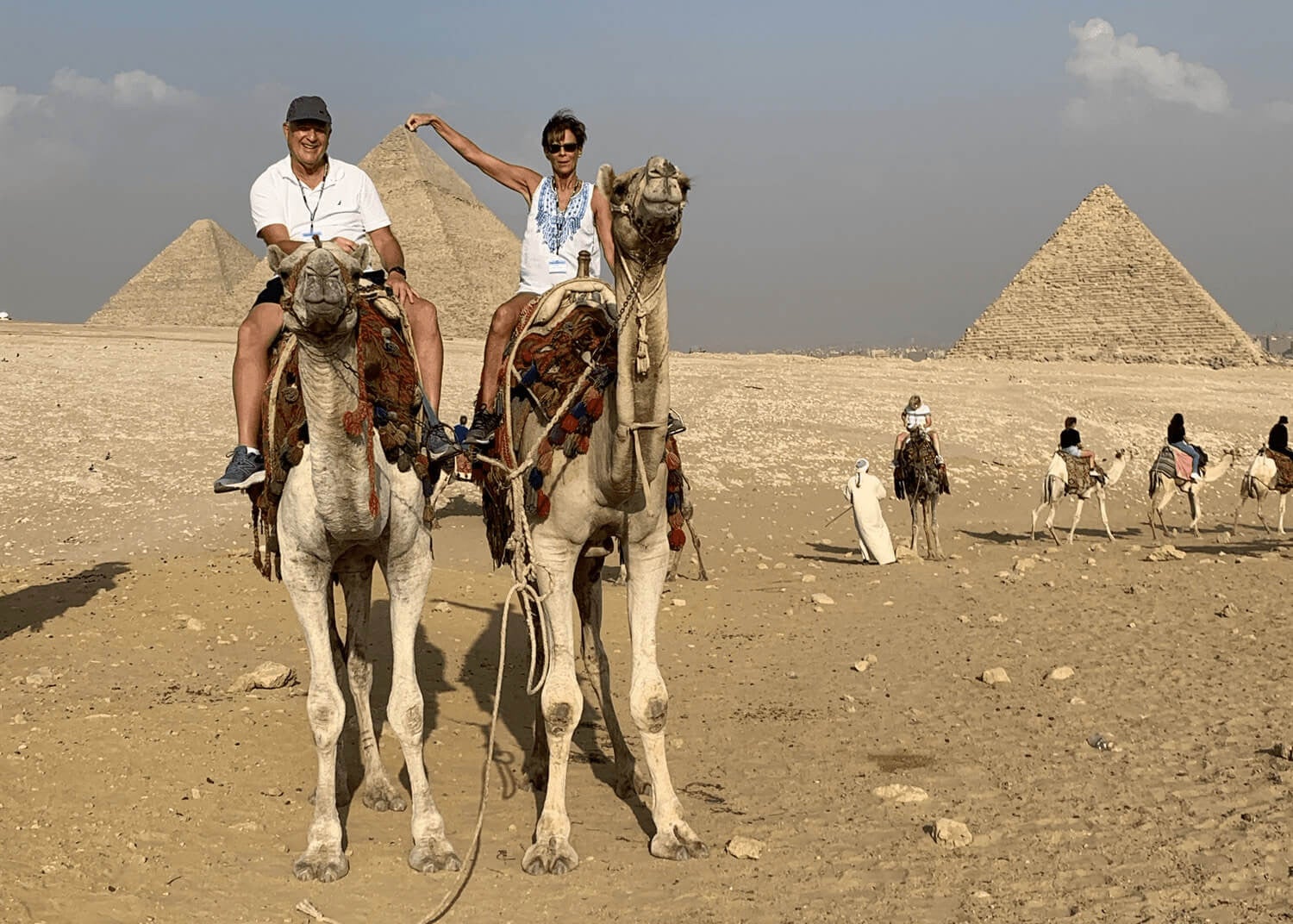
Guests riding camels in front of Great Pyramid and Giza Plateau
Explore More: Extend Your Journey to Jordan
For travelers eager to discover even more ancient wonders, Holiday Vacations offers an exciting add-on option to Jordan. This optional extension seamlessly adds several days of exploration before your Egyptian adventure.
Highlights of the Jordan extension include:
- Petra: Walk through the narrow Siq canyon to marvel at the famous Treasury, a city carved directly into vibrant rose-red sandstone cliffs by the ancient Nabataeans.
- Wadi Rum: Tour the dramatic desert landscapes of the Valley of the Moon, famous for its towering rock formations and red sand dunes.
- The Dead Sea: Float effortlessly in the mineral-rich, buoyant waters of the lowest point on Earth.
- Amman and Jerash: Discover Jordan's capital city and stroll through one of the best-preserved Roman provincial towns in the world.
Choosing extended Egypt tours with a Jordan add-on creates the ultimate Middle Eastern cultural journey.
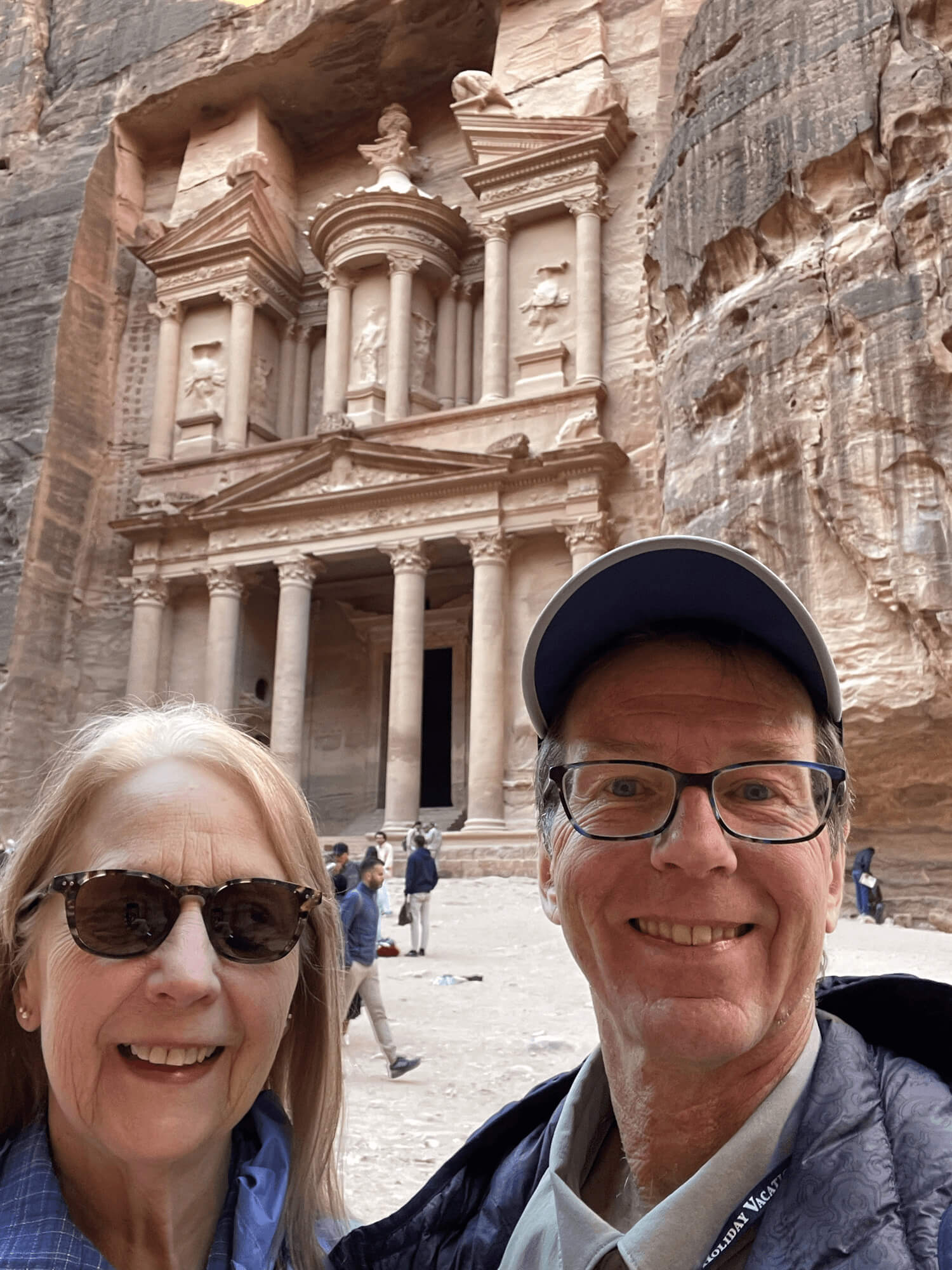
Guests at The Treasury in Petra, Jordan
Your Egyptian Odyssey Awaits
From the soaring stone blocks of Giza to the vivid underground walls in Luxor and a Nile River cruise, our Gems of Egypt & The Nile River Tour offers an unparalleled journey into human history and cultural mystery. To experience these spectacular ancient landmarks firsthand without a single logistical worry, call 1-888-867-2190 to speak with a friendly Tour Sales Consultant or book your spot online with a low $200 deposit.
Egypt Tours: Frequently Asked Questions
What is the best time of year to visit Egypt?
The ideal time to visit is during the cooler months between October and April, when temperatures in Cairo and along the Nile River remain pleasant for outdoor sightseeing.
What should I wear when visiting ancient temples and tombs?
Wear lightweight, breathable clothing and comfortable walking shoes. Since many sites involve walking over uneven stone and sand, sturdy footwear is essential. Modest attire covering shoulders and knees is appropriate when visiting active religious sites.
Do I need a special visa to travel to Egypt?
Most foreign visitors require an entry visa for Egypt. Travelers on organized tours receive full assistance with visa processing and entry requirements upon arrival.
What type of meals and dietary options are available on board the Nile riverboat?
Meals aboard the cruise feature a variety of flavorful local Egyptian dishes alongside international cuisine served buffet and family-style. Chefs accommodate common dietary needs, and all food on board is prepared to standard health and safety guidelines.
Is it safe to drink the tap water in Egypt?
It is recommended that travelers avoid drinking municipal tap water in Egypt. Clean, safe bottled water is provided throughout guided tours and aboard the riverboat for drinking and brushing teeth.